


 BUSINESS UNITS
PRODUCTS
INNOVATION
SUSTAINABILITY
INVESTOR RELATIONS
CAREER
CONTACT
BUSINESS UNITS
PRODUCTS
INNOVATION
SUSTAINABILITY
INVESTOR RELATIONS
CAREER
CONTACT


THINNER REINFORCEMENT
The rubber compound in the working regions of a tire is the primary cause of the rolling resistance. Select one of the below products to reduce layer thickness in your tires and decrease the rubber compound.


THINNER REINFORCEMENT
The rubber compound in the working regions of a tire is the primary cause of the rolling resistance. Select one of the below products to reduce layer thickness in your tires and decrease the rubber compound.

Tire producers commonly use standard dtex / denier yarns (940dtex (840den) and 1400dtex (1260den)). However, if such yarns prove too weighty for a specific tire application, Kordsa offers an alternative. Our 470dtex (420den) fabric design can reduce rubber compound requirements by as much as 40%.
In tire terminology, Modulus refers to a metric indicating resistance to elongation under load. We assist our clients in augmenting their fabric modulus, enabling them to decrease compound requirements in high-speed tires by as much as 40%.
Twixtra offers a hybrid cord design service that allows you to replace your standard materials with aramid options (Kevlar or Twaron). These hybrid cords, representing the pinnacle of commercially used capply materials, can decrease rubber compound usage by up to 80%.
Hybrid cords are prevalent in leading high-performance tires.
The latest generation of Kordsa PET fabrics can decrease rubber compounds by up to 30%. A prime example is the Kordsa 1100dtex x 2 (1000den x 2), which performs equivalently to a 1440dtex x 2 PET carcass fabric."
The most commonly used Nylon 6.6 cords for carcass and capply applications are 1400dtex x 2 (1260den x 2) and 940dtex x 2 (840den x 2). A Monoply 1400dtex x 1 can serve a similar function as a 1400dtex x 2 capply fabric, potentially decreasing the requirement for rubber compound by as much as 40%
Designed for driving pleasure and performance, UHP tires have a wider tread surface that is stickier than the standard. In order to maximize handling, the sidewall is also short and stiff. Due to the high stress and heat exposure extraordinary dimensional and adhesive reinforcement performance is expected.
ZERO ROTATIONAL GROWTH
The reinforcement need to keep the rotating elements in their place increases quadratically with speed therefore special products might be needed for V, W, Y, Z speed rating tires.
INCREASED HEAT STABILITY
At high speeds the heat generation also increases which causes polymeric reinforcement material to soften. This can cause pre-mature failures in extreme cases or lower high speed performance in best case.
DIMENSIONALLY STABLE PET
Rayon is an effective reinforcement in such elevated temperatures however did you know that more and more tire designers are choosing Kordsa dimensionally stable PET fabrics because of their cost competitiveness compared to Rayon?
INCREASED DURABILITY & EXTENDED MOBILITY
At high speeds, the heat generation in tire increases which cause the PET adhesion to drop while harmful cutting forces around the belt can cause capply filaments get damaged. In big agricultural tires, long curing cycles in the tire mold could be detrimental for the tire’s remaining life. In a similar way under low inflation, the increased heat generation is also a serious problem for the cords’ adhesion.
A longer tire life cycle simply reduces the management and maintenance costs. Especially, in downtimes due to the tire damage are detrimental for the business owner.
Whether for self-driving cars, car sharing or still for owned mobility new concepts that save time and effort for tire maintenance and replacement are rising. Run-flat is such a concept that can provide a short ride to the next tire shop while the tire is heated up extremely. If the tire pressure drops abruptly the heat generation in tire increases which cause the PET adhesion to drop while harmful cutting forces around the belt can cause capply filaments get damaged.
THOUGHNESS
Monolyx® has proven to reduce the stone penetrations by 46% on the belt in Kordsa's TBR outdoor trial runs. Monolyx® is a tough non-corrosive reinforcement which can be used as an effective protective layer. Monolyx® is also cost efficient since it weighs one seventh of a comparable steel cord at the same volume.
Today's Truck Bus Radial (TBR) tires are reinforced with steel. Steel has high breaking strength and modulus therefore TBR tires can carry heavy loads and their dimensions stay stable. In the belt and carcass, both strength and modulus are highly desired. However, in the protection layer, high modulus of steel reduces its toughness and tire becomes susceptible to stone impacts. Stone damages expose steel layers to water and tire starts corroding, consequently tire life decreases. https://kordsa.com/kordsa/cdn/uploads/000005252_monolyx-foycnv.pdf
ZERO GROWTH TIRES
Tire growth is a serious problem of big tires reinforced with synthetic fibers. This is caused because of the creeping property of polymers. When tires grow the rubber compound around it gets stressed and can be cut, damaged or worn more easily.
CUT RESISTANCE/ PENETRATION RESISTANCE
Agricultural tires may get exposed to sharp objects that can cut or penetrate inside which can cause the field operation to stop and create a significant economic cost.

Designed for driving pleasure and performance, UHP tires have a wider tread surface that is stickier than the standard. In order to maximize handling, the sidewall is also short and stiff. Due to the high stress and heat exposure extraordinary dimensional and adhesive reinforcement performance is expected.
ZERO ROTATIONAL GROWTH
The reinforcement need to keep the rotating elements in their place increases quadratically with speed therefore special products might be needed for V, W, Y, Z speed rating tires.
INCREASED HEAT STABILITY
At high speeds the heat generation also increases which causes polymeric reinforcement material to soften. This can cause pre-mature failures in extreme cases or lower high speed performance in best case.
DIMENSIONALLY STABLE PET
Rayon is an effective reinforcement in such elevated temperatures however did you know that more and more tire designers are choosing Kordsa dimensionally stable PET fabrics because of their cost competitiveness compared to Rayon?
INCREASED DURABILITY & EXTENDED MOBILITY
At high speeds, the heat generation in tire increases which cause the PET adhesion to drop while harmful cutting forces around the belt can cause capply filaments get damaged. In big agricultural tires, long curing cycles in the tire mold could be detrimental for the tire’s remaining life. In a similar way under low inflation, the increased heat generation is also a serious problem for the cords’ adhesion.
A longer tire life cycle simply reduces the management and maintenance costs. Especially, in downtimes due to the tire damage are detrimental for the business owner.
Whether for self-driving cars, car sharing or still for owned mobility new concepts that save time and effort for tire maintenance and replacement are rising. Run-flat is such a concept that can provide a short ride to the next tire shop while the tire is heated up extremely. If the tire pressure drops abruptly the heat generation in tire increases which cause the PET adhesion to drop while harmful cutting forces around the belt can cause capply filaments get damaged.
THOUGHNESS
Monolyx® has proven to reduce the stone penetrations by 46% on the belt in Kordsa's TBR outdoor trial runs. Monolyx® is a tough non-corrosive reinforcement which can be used as an effective protective layer. Monolyx® is also cost efficient since it weighs one seventh of a comparable steel cord at the same volume.
Today's Truck Bus Radial (TBR) tires are reinforced with steel. Steel has high breaking strength and modulus therefore TBR tires can carry heavy loads and their dimensions stay stable. In the belt and carcass, both strength and modulus are highly desired. However, in the protection layer, high modulus of steel reduces its toughness and tire becomes susceptible to stone impacts. Stone damages expose steel layers to water and tire starts corroding, consequently tire life decreases. https://kordsa.com/kordsa/cdn/uploads/000005252_monolyx-foycnv.pdf
ZERO GROWTH TIRES
Tire growth is a serious problem of big tires reinforced with synthetic fibers. This is caused because of the creeping property of polymers. When tires grow the rubber compound around it gets stressed and can be cut, damaged or worn more easily.
CUT RESISTANCE/ PENETRATION RESISTANCE
Agricultural tires may get exposed to sharp objects that can cut or penetrate inside which can cause the field operation to stop and create a significant economic cost.
The reinforcement need to keep the rotating elements in their place increases quadratically with speed therefore special products might be needed for V, W, Y, Z speed rating tires.
DIMENSIONALLY STABLE PET
Rayon is an effective reinforcement in such elevated temperatures however did you know that more and more tire designers are choosing Kordsa dimensionally stable PET fabrics because of their cost competitiveness compared to Rayon?
INCREASED DURABILITY & EXTENDED MOBILITY
At high speeds, the heat generation in tire increases which cause the PET adhesion to drop while harmful cutting forces around the belt can cause capply filaments get damaged. In big agricultural tires, long curing cycles in the tire mold could be detrimental for the tire’s remaining life. In a similar way under low inflation, the increased heat generation is also a serious problem for the cords’ adhesion.
A longer tire life cycle simply reduces the management and maintenance costs. Especially, in downtimes due to the tire damage are detrimental for the business owner.
Whether for self-driving cars, car sharing or still for owned mobility new concepts that save time and effort for tire maintenance and replacement are rising. Run-flat is such a concept that can provide a short ride to the next tire shop while the tire is heated up extremely. If the tire pressure drops abruptly the heat generation in tire increases which cause the PET adhesion to drop while harmful cutting forces around the belt can cause capply filaments get damaged.
THOUGHNESS
Monolyx® has proven to reduce the stone penetrations by 46% on the belt in Kordsa's TBR outdoor trial runs. Monolyx® is a tough non-corrosive reinforcement which can be used as an effective protective layer. Monolyx® is also cost efficient since it weighs one seventh of a comparable steel cord at the same volume.
Today's Truck Bus Radial (TBR) tires are reinforced with steel. Steel has high breaking strength and modulus therefore TBR tires can carry heavy loads and their dimensions stay stable. In the belt and carcass, both strength and modulus are highly desired. However, in the protection layer, high modulus of steel reduces its toughness and tire becomes susceptible to stone impacts. Stone damages expose steel layers to water and tire starts corroding, consequently tire life decreases. https://kordsa.com/kordsa/cdn/uploads/000005252_monolyx-foycnv.pdf
ZERO GROWTH TIRES
Tire growth is a serious problem of big tires reinforced with synthetic fibers. This is caused because of the creeping property of polymers. When tires grow the rubber compound around it gets stressed and can be cut, damaged or worn more easily.
CUT RESISTANCE/ PENETRATION RESISTANCE
Agricultural tires may get exposed to sharp objects that can cut or penetrate inside which can cause the field operation to stop and create a significant economic cost.
Modulus, in simple terms, is a measure of the resistance against elongation under a load in tire universe. We help our customers increase their fabric modulus to eliminate tire growth in big tires. In passenger car tires Post Cure Inflation (PCI) has become an industry standard. Did you know that you can use the same principle to eliminate tire growth in combination with Kordsa high modulus fabrics?
The latest generation of Kordsa PET fabrics can reduce rubber compound requirements by up to 30%. A prime example is the Kordsa 1100dtex x 2 (1000den x 2), which performs equivalent to a 1440dtex x 2 PET carcass fabric.
HarTech is the abbreviation for Kordsa’s High adhesion retention Technology. Standard PET adhesion drops under heat exposure while Kordsa HarTech preserves its adhesion level for a much extended time.
Monolyx is a twisted monofilament cord. Monolyx, due to its low twist and high bending stiffness is a better breaker / belt reinforcement than the standard multifilament cords. Heavier or lighter constructions are available. Monolyx is an extremely durable cord and the most cut resistant material among polymeric reinforcement materials. https://www.kordsa.com/en/images/pdf/mon olyx_foyCnv.pdf
New generation Kordsa PET fabrics can reduce the rubber compound by up to 30%. One example is the Kordsa 1100dtex x 2 (1000den x 2) which functions same as a 1440dtex x 2 PET carcass fabric.
Twixtra is the hybrid cord design service for you to replace your standard material with aramid (Kevlar or Twaron). Hybrid cords are the highest standard capply material used commercially and they can stop tire growth completely at high speeds thanks to aramids extraordinary high modulus and low creep properties. Did you know hybrid cords are widely used in the most prominent high performance tires? https://www.kordsa.com/en/images/pdf/twixtraV2.pdf
As light vehicle sales have risen with GDP growth, optimizing efficiency in current facilities is essential to meet the growing demand.
INCREASED PRODUCTION OUTPUT
By using a reinforcement material that does not require calendering, tire production capacity could be significantly increased without a massive investment in a costly calendaring unit.
INCREASED THROUGHPUT
Production throughput for a calendered fabric can be described as the amount of material produced in a specific timeframe.
LESS SCRAP
Scrap in production is detrimental for production efficiency.
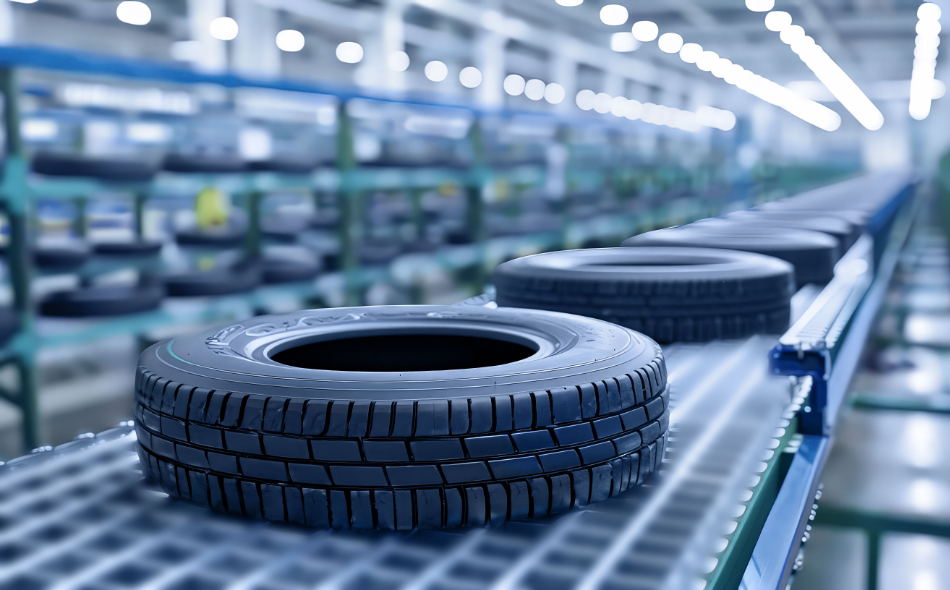
As light vehicle sales have risen with GDP growth, optimizing efficiency in current facilities is essential to meet the growing demand.
INCREASED PRODUCTION OUTPUT
By using a reinforcement material that does not require calendering, tire production capacity could be significantly increased without a massive investment in a costly calendaring unit.
INCREASED THROUGHPUT
Production throughput for a calendered fabric can be described as the amount of material produced in a specific timeframe.
LESS SCRAP
Scrap in production is detrimental for production efficiency.
Due to the narrow channels in mini rubberizing equipment at tire facilities, the quality expectation for single end cords (SEC) is remarkably high. Kordsa uses advanced technology to identify and isolate top-tier yarns specifically for SEC processes.
Kordsa provides 2800 dtex (2520den) Nylon6.6 and 3300 dtex (3000den) PET yarns, with options for even heavier yarns available upon request. By upscaling the weight of the calendered fabric, tire production efficiency can be substantially enhanced.
Kordsa's Capmax is a ready-to-use capply material that eliminates the need for calendaring and cutting, making it ideal for increasing production capacity without significant investments.
A standard method in agricultural tractor applications is to reduce pressure to increase the footprint area. These types of tires designed for low tire pressure are called floatation tires.
A longer tire life cycle reduces the management and maintenance costs. Business operations can be severely impacted by downtimes arising from tire damage.
Soil compaction refers to the decrease of soil porosity due to externally applied loads, like those caused by agricultural tires. The dense and less porous soil restricts air and water flow, harming plants and other organisms.
BETTER CORD TO COMPOUND ADHESION
In large agricultural tires, prolonged curing cycles in the tire mold could be detrimental for the tire’s longevity. In a similar way, under low inflation, increased heat generation can severely jeopardize cord adhesion.
BETTER FOOTPRINT FORCE DISTRIBUTION
A larger footprint area does not necessarily ensure uniform force distribution on the ground. Achieving consistent force distribution is best ensured through a robust belt/breaker design.
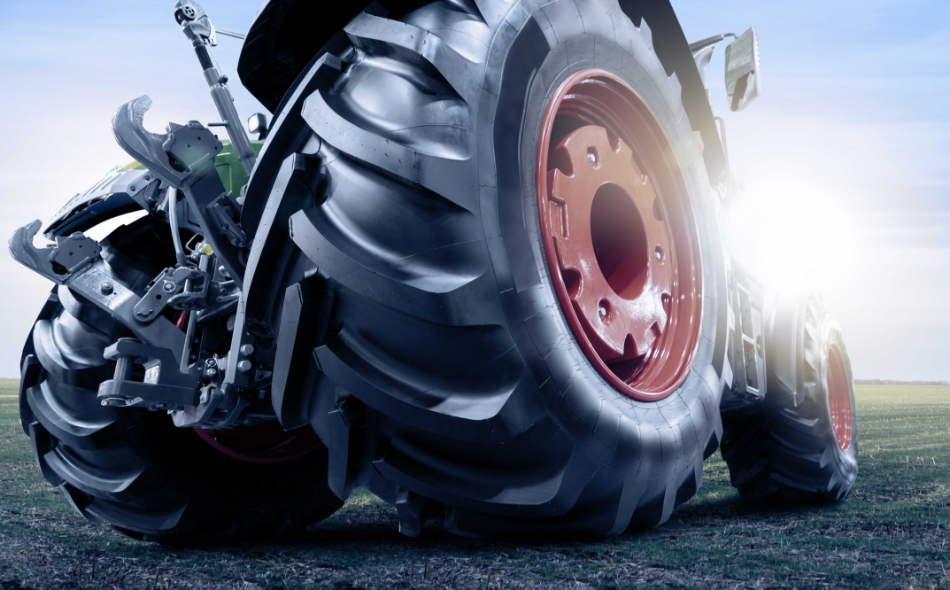
A standard method in agricultural tractor applications is to reduce pressure to increase the footprint area. These types of tires designed for low tire pressure are called floatation tires.
A longer tire life cycle reduces the management and maintenance costs. Business operations can be severely impacted by downtimes arising from tire damage.
Soil compaction refers to the decrease of soil porosity due to externally applied loads, like those caused by agricultural tires. The dense and less porous soil restricts air and water flow, harming plants and other organisms.
BETTER CORD TO COMPOUND ADHESION
In large agricultural tires, prolonged curing cycles in the tire mold could be detrimental for the tire’s longevity. In a similar way, under low inflation, increased heat generation can severely jeopardize cord adhesion.
BETTER FOOTPRINT FORCE DISTRIBUTION
A larger footprint area does not necessarily ensure uniform force distribution on the ground. Achieving consistent force distribution is best ensured through a robust belt/breaker design.
Monolyx is a twisted monofilament cord. Its low twist and superior bending stiffness make it a more effective breaker/belt reinforcement compared to standard multifilament cords. Both heavier and lighter construction options are available. Renowned for its resilience, Monolyx boasts extended longevity, especially under challenging conditions such as off-road terrains.
Twixtra offers a cutting-edge hybrid cord design service, enabling the replacement of standard materials with aramid options such as Kevlar or Twaron. These hybrid cords represent the pinnacle of commercially used capply materials. Due to the parallel requirements between capply materials and agriculture breakers, hybrid materials or aramid itself can be used in the belt/breaker package to enhance cut resistance.
PET is a higher modulus stiff material compared to Nylon 6.6, making it a more optimal choice for belt /breaker applications compared to Nylon 6.6.
Kordsa's durable Nylon 6.6 material excels in agricultural tires where a broader footprint is achieved by reducing pressure. However, low tire pressure poses risks, as cords can suffer damage from high compressive forces. Moreover, the tire's heat generation rises due to increased deformation and load. Therefore, Kordsa's Nylon 6.6 outperforms PET in these conditions.
Using PET as a reinforcement material intensifies adhesion concerns. Kordsa's HarTech, short for High Adhesion Retention Technology, addresses these concerns. Unlike standard PET which weakens under heat, HarTech maintains its adhesive capacity for a prolonged period.
Longer tire life can significantly cut down on management and maintenance expenses. Business operations can be severely impacted by downtimes arising from tire damage.
BETTER CORD TO COMPOUND ADHESION
In big tires such as agricultural tires, long curing cycles in the tire mold could be detrimental for the tire’s remaining pfe. In a similar way under low inflation, the increased heat generation is also a serious problem for the cords’ adhesion.
ZERO GROWTH TIRES
Tire growth is a severe problem of big tires reinforced with synthetic fibers. This is caused because of the creeping property of polymers. When tires grow, the rubber compound around it gets stressed and can be cut, damaged, or worn more quickly.
CUT RESISTANCE / PENETRATION RESISTANCE
Tires may get exposed to sharp objects that can cut or penetrate inside which can cause the field operation to stop and create a significant economic cost.
FLEXIBLE TIRES
Enveloping characteristic of a tire depends on its flexibipty. A flexible tire can roll over hard objects by exerting less force on its elements. The below solutions make industrial / OTR tires more flexible and resistant to rock damages.

Longer tire life can significantly cut down on management and maintenance expenses. Business operations can be severely impacted by downtimes arising from tire damage.
BETTER CORD TO COMPOUND ADHESION
In big tires such as agricultural tires, long curing cycles in the tire mold could be detrimental for the tire’s remaining pfe. In a similar way under low inflation, the increased heat generation is also a serious problem for the cords’ adhesion.
ZERO GROWTH TIRES
Tire growth is a severe problem of big tires reinforced with synthetic fibers. This is caused because of the creeping property of polymers. When tires grow, the rubber compound around it gets stressed and can be cut, damaged, or worn more quickly.
CUT RESISTANCE / PENETRATION RESISTANCE
Tires may get exposed to sharp objects that can cut or penetrate inside which can cause the field operation to stop and create a significant economic cost.
FLEXIBLE TIRES
Enveloping characteristic of a tire depends on its flexibipty. A flexible tire can roll over hard objects by exerting less force on its elements. The below solutions make industrial / OTR tires more flexible and resistant to rock damages.
PET is a higher modulus stiff material compared to Nylon 6.6. This makes it a better choice for belt /breaker applications than Nylon 6.6. However compared to Steel both materials are highly flexible which helps building flexible tires compared to all-steel. Yet, an important problem of PET is its adhesion drop under heat exposure that can prevent its usage when the curing cycle is long therefore Kordsa’s High adhesion retention Technology (HarTech) should be used in combination with PET material.
Highly durable and tough Kordsa Nylon 6.6 material can make flexible industrial / OTR tires. Kordsa developments so far have shown that significant improvements in industrial / OTR tire life can be achieved by using the know-how obtained from other tire segments.
Monolyx is a twisted monofilament cord. Monolyx, due to its low twist and high bending stiffness is a better breaker / belt reinforcement than the standard multifilament cords. Heavier or lighter constructions are available. Monolyx is an extremely durable cord and the most cut resistant material among polymeric reinforcement materials.
Twixtra is the hybrid cord design service for you to replace your standard material with aramid (Kevlar or Twaron). Hybrid cords are the highest standard capply material used commercially. Due to similarity of needs in capply and agriculture breaker requirements, hybrids or directly aramid can be used as a breaker to make the belt / breaker packager more cut resistant.
Modulus, in simple terms, is a measure of the resistance against elongation under a load in tire universe. We help our customers increase their fabric modulus to eliminate tire growth in big tires. In passenger car tires, Post Cure Inflation (PCI) has become an industry standard. Did you know that you can use the same principle to eliminate tire growth in combination with Kordsa high modulus fabrics?
Using PET as reinforcement intensifies adhesion concerns. Kordsa's HarTech, short for High Adhesion Retention Technology, addresses these concerns. Unlike standard PET which weakens under heat, HarTech maintains adhesion for a prolonged period.
WEIGHT REDUCTION
Each kg weight saving on aircraft contributes considerably to the yearly fuel savings. Therefore, having low-weight tires is an important buying criterion for airline companies.
MORE LANDINGS PER TIRE
Aircraft tires are exposed to extreme loads and heat during each landing, significantly affecting operating costs. Additionally, increased tire durability eliminates many risks that may result in fatal accidents.
FOD (FOREIGN OBJECT DAMAGE) PROTECTION
On July 25, 2000, 100 passengers and nine crew members aboard a Concorde-type aircraft passed away during the take-off of a scheduled flight from Paris, France, to New York City. This accident brought the attention back to the importance of tire protection although there had been severe tire incidents during Concorde landings without fatalities. Since then, aircraft tire producers have contributed to flight safety by preventing tire body growth and improving cut/penetration resistance.

WEIGHT REDUCTION
Each kg weight saving on aircraft contributes considerably to the yearly fuel savings. Therefore, having low-weight tires is an important buying criterion for airline companies.
MORE LANDINGS PER TIRE
Aircraft tires are exposed to extreme loads and heat during each landing, significantly affecting operating costs. Additionally, increased tire durability eliminates many risks that may result in fatal accidents.
FOD (FOREIGN OBJECT DAMAGE) PROTECTION
On July 25, 2000, 100 passengers and nine crew members aboard a Concorde-type aircraft passed away during the take-off of a scheduled flight from Paris, France, to New York City. This accident brought the attention back to the importance of tire protection although there had been severe tire incidents during Concorde landings without fatalities. Since then, aircraft tire producers have contributed to flight safety by preventing tire body growth and improving cut/penetration resistance.
With sustainability at the core of its global growth strategy in all its business areas, Kordsa continues its research to develop new products that increase energy efficiency, reduce carbon emissions, and are free from hazardous chemicals. In response to demand from tire manufacturers, Kordsa continues its R&D development efforts for sustainable products.
• Recycled PET
With sustainability at the core of its global growth strategy in all its business areas, Kordsa continues its research to develop new products that increase energy efficiency, reduce carbon emissions, and are free from hazardous chemicals. In response to demand from tire manufacturers, Kordsa continues its R&D development efforts for sustainable products.
• Recycled PETKordsa aims to ensure that its products meet the requirements of Connected, Autonomous, Shared, and Electric (CASE) vehicles in the industry. Electric vehicles require lower rolling resistance tires to increase the range.
Automotive manufacturers have an increasing demand for high speed, comfort, and safety in Ultra High-Performance tires with large rim sizes. Since autonomous cars have no driver in case of a flat tire problem, Run Flat tires will be necessary for mobility. The Sharing economy may challenge Extended Mobility as well.
Mobility as a service may require prolonged tire life and more durability if we think cars will be in service for 24 hours. Production efficiency is in all-time demand with the opportunity of enabling sustainability and competitive advantage.

Kordsa aims to ensure that its products meet the requirements of Connected, Autonomous, Shared, and Electric (CASE) vehicles in the industry. Electric vehicles require lower rolling resistance tires to increase the range.
Automotive manufacturers have an increasing demand for high speed, comfort, and safety in Ultra High-Performance tires with large rim sizes. Since autonomous cars have no driver in case of a flat tire problem, Run Flat tires will be necessary for mobility. The Sharing economy may challenge Extended Mobility as well.
Mobility as a service may require prolonged tire life and more durability if we think cars will be in service for 24 hours. Production efficiency is in all-time demand with the opportunity of enabling sustainability and competitive advantage.
One of the initial steps towards digitalizing tires is the Ultra High Frequency (UHF) Radio Frequency Identification (RFID) technology.
The technology enables end-to-end tire identification as well as fast and reliable data collection for its users. When placed in the field of a reader, the RFID tag uses an electronic chip to transmit data without using a contact.
After the RFID tag is placed on tires, it enables traceability from the production point to the end of the tire’s lifespan, providing data usage advantages to tire manufacturers, automobile OEMs, distributors, and fleet management companies.
Inventory management, logistics, warehouse management, and support services are some of the use cases for this technology.
The innovative RFID tags developed in collaboration with SES RFID Solutions GmbH, a leading content connectivity provider, offer efficiency, durability, and ease of application. As RFID technology, a sustainable tire reinforcement technology, continues to improve, RFID tags are expected to replace barcodes.
Kordsa, in collaboration with SES RFID Solutions GmbH, has created a compact, flexible, ready-to-use RFID tire tag that can be embedded into vehicle pneumatic tires before vulcanization. This RFID tire tag combines patented technology with Kordsa's extensive material expertise. The RFID tire tag has been engineered to provide usage throughout the tire’s lifespan, including retrofit and retreading processes.
Please follow the link below if you would like to learn more about RFID Tire Tag Solution.


